Random selection is one of those tasks that seems simple until you actually need to do it fairly, efficiently, and at scale. Whether you're a teacher selecting students, a researcher choosing study participants, a business professional assigning tasks, or an event organizer picking contest winners, the challenge is the same: how do you make selections that are genuinely random, transparently fair, and practically efficient?
PickerKit was built specifically to solve this problem. Let's explore the common data selection challenges people face and how PickerKit's tools provide elegant solutions.
The Problem with Traditional Selection Methods
Before digital tools, random selection meant physical mechanisms: drawing names from hats, rolling dice, flipping coins, spinning wheels, or using random number tables. These methods work but have significant limitations:
Lack of Transparency
In group settings, physical random selection happens too quickly for everyone to verify fairness. Did all the names actually make it into the hat? Was the draw genuinely random? Skepticism can undermine trust in results.
Practical Awkwardness
Physical methods require preparation and materials. You need paper, containers, dice, or other physical objects. This creates friction that discourages use when random selection would otherwise be beneficial.
Scale Limitations
Drawing 50 random names from a pool of 500 is tedious and error-prone with physical methods. Large-scale random selection becomes a significant time investment.
Remote Impossibility
In our increasingly digital and distributed world, physical random selection doesn't work for remote teams, online classes, or virtual events.
How PickerKit Addresses These Challenges
Transparent Fairness
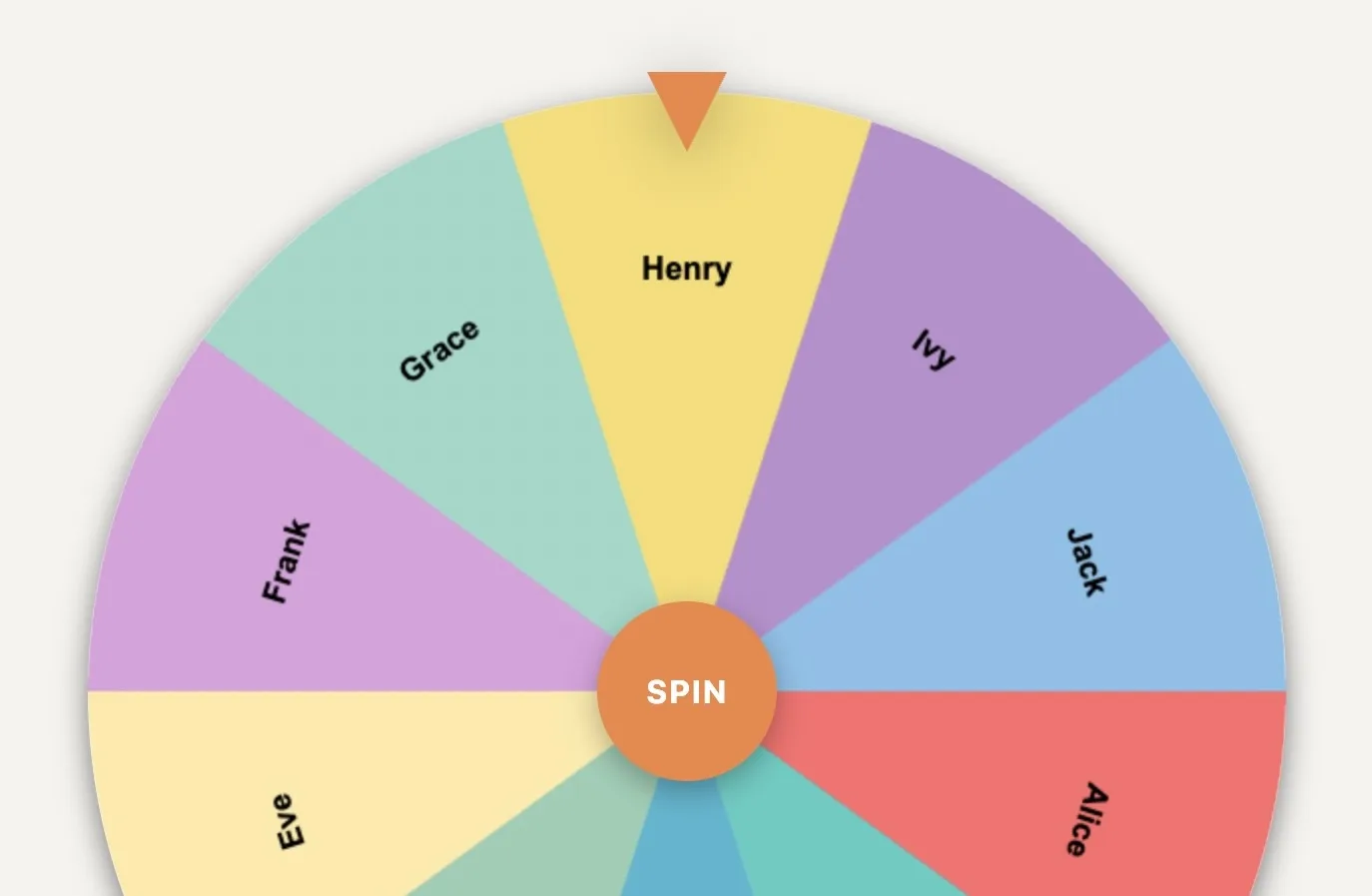
PickerKit's visual wheel interface makes randomness tangible. When you spin a wheel containing all options, everyone can see that all possibilities are present and that the selection process is genuinely random. The wheel spins through many options visibly before landing on a result, building trust through transparency.
For high-stakes selections like contest drawings or important assignments, you can share your screen or project the wheel, allowing all stakeholders to witness the selection in real-time. This visual confirmation eliminates suspicion and builds consensus around results.
PickerKit uses the browser's Web Crypto API when available and a standard browser random fallback otherwise. Equal-sized wheel slices receive equal selection probability. It is intended for ordinary picker workflows, not security, regulated lotteries, or scientific sampling protocols.
Instant Efficiency
PickerKit eliminates preparation time. No gathering materials, writing names on paper, or setting up physical mechanisms. Open the tool in your browser, add your options (by typing, pasting, or loading a saved configuration), and make your selection in seconds.
For recurring selections, shareable links let you save configurations. A teacher running weekly classroom raffles can bookmark the picker with all student names pre-loaded, making each week's selection literally a single click. Event organizers running multiple contests can prepare picker configurations in advance, ensuring smooth execution when the moment comes.
Specific Use Cases and Solutions
Educational Environments
The Challenge: Teachers need to call on students fairly throughout the day, form diverse groups for projects, and occasionally select students for special roles or prizes. Doing this manually risks unconscious bias, leads to students feeling overlooked or unfairly targeted, and consumes valuable class time.
The PickerKit Solution: Use the Name Picker with the class roster loaded. For general selections, spin as needed so the method is visible to students. For group projects, use the Team Picker to divide the class into evenly sized random groups. Save configurations with student names for repeated use.
Showing the complete roster and selection process can make the participation rule easier to explain than choosing students ad hoc. Teachers should still allow appropriate preparation time and accommodations.
Business Task Assignment
The Challenge: Team leaders need to assign tasks, responsibilities, or opportunities fairly among team members. Manual assignment can lead to perceptions of favoritism. Asking for volunteers creates imbalance where some people always volunteer and others never do.
The PickerKit Solution: Use the Name Picker to randomly assign tasks, rotating through team members fairly. For complex projects requiring team structures, use the Team Picker to create balanced working groups. The transparent randomness eliminates favoritism concerns and ensures everyone gets equitable opportunity to lead, learn, and contribute.
Research and Data Collection
The Challenge: Researchers need random sampling for statistical validity. Manual selection or convenience sampling introduces bias that compromises study quality. Large sample frames make manual random selection tedious and error-prone.
The PickerKit Solution: Import your sample frame into the Number Picker (for numeric IDs) or Name Picker (for names), then remove each selected result before the next draw when duplicates are not allowed. For formal research sampling, use software and a documented protocol appropriate to the study design.
Content Creator Giveaways
The Challenge: Content creators running giveaways and contests need selection processes that audiences trust. Manual selection or opaque automated systems can draw accusations of rigging or favoritism, damaging creator credibility and audience relationships.
The PickerKit Solution: Screen-share the Name Picker during livestreams or record the selection process for edited content. Add all eligible participants' names, letting the audience see the full list, then spin the wheel publicly. The visual transparency builds trust and makes the giveaway itself exciting content rather than just an administrative task.
Tips for Maximizing PickerKit Effectiveness
Prepare Configurations in Advance
Don't wait until you need to make a selection to set up your picker. Create and save configurations ahead of time, reducing stress and speeding execution when the moment comes.
Communicate the Method
Tell participants you're using random selection before revealing results. Transparency about method builds trust in outcomes.
Leverage Bulk Import
If you're manually typing lots of names, you're working too hard. Copy from existing documents, spreadsheets, or databases for instant configuration.
Use Removal for Sequential Selections
When choosing multiple winners, click Remove in the result popup after every selection so the same entry cannot win twice.
The Broader Impact
When you remove friction from making fair decisions, interesting things happen. Teachers call on students more equitably because it's easy to do so. Team leaders distribute opportunities more fairly because random assignment is faster than deliberation. Researchers improve study quality because proper random sampling is accessible rather than tedious. For practical tips on integrating these tools into your workflow, see our workflow integration guide.
PickerKit doesn't just save time — it enables better outcomes by making fairness the path of least resistance. When the fair approach is also the easiest approach, people naturally gravitate toward it. This has ripple effects: more equitable classrooms, more balanced team dynamics, more rigorous research, more trustworthy content creation.
Random selection also reduces decision fatigue. When choosing between equivalent options, spending mental energy on deliberation provides no value. Offloading these decisions to a random selector preserves cognitive resources for choices that genuinely require judgment.
Looking Forward
As work becomes more distributed, education more digital, and communities more virtual, tools that facilitate fair, transparent decision-making become increasingly important. PickerKit evolves to meet these needs, maintaining simplicity while adding capabilities that users request. Learn more about the future of smart web tools and where decision-making technology is headed.
The core principle remains unchanged: everyone deserves access to tools that make fairness easy, transparent, and engaging. Whether you're selecting one name or organizing hundreds of people, PickerKit simplifies the data selection challenge so you can focus on what comes next. Discover why PickerKit matters for privacy, fairness, and simplicity in our foundational principles.