We're living through a transformation in how software is built, distributed, and used. The traditional model—install applications locally, pay upfront or subscribe monthly, manage updates manually—is giving way to a new paradigm: web-native tools that work instantly, run anywhere, and focus on doing one thing excellently. PickerKit sits at the intersection of several important trends that are reshaping software for the better.
The Unbundling of Software
For decades, software existed in monolithic packages. Microsoft Office bundled word processing, spreadsheets, presentations, and more. Adobe Creative Suite combined photo editing, illustration, layout, and video editing. This bundling made sense in an era of physical distribution and installation overhead—why install five separate programs when you could install one package?
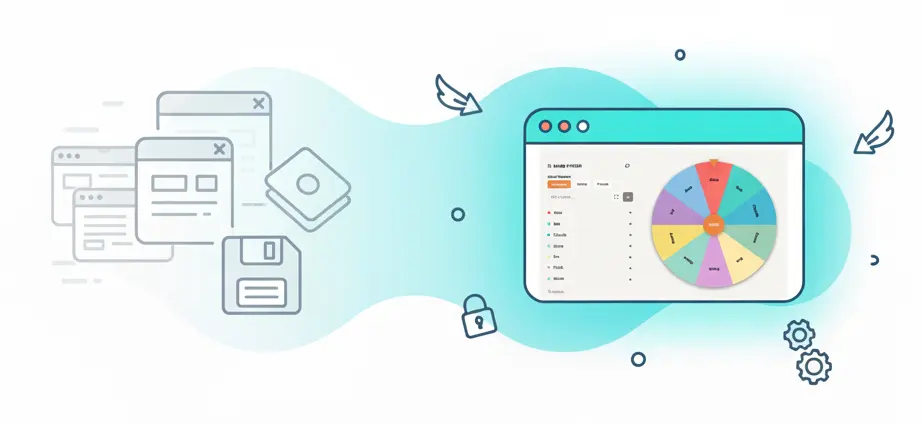
The web changed this calculus fundamentally. When software runs in browsers without installation, the overhead of using multiple specialized tools approaches zero. Open a tab, use a tool, close the tab. No installation, no updates, no storage consumption, no maintenance. This "tab-complete-close" workflow makes unbundling practical.
The Unbundling Revolution
Traditional Model
- Massive software suites
- Installation required
- High upfront costs
- Complex feature sets
Modern Web Tools
- Specialized, focused tools
- Instant browser access
- Free or low-cost
- Simple, optimized interfaces
We're seeing this pattern everywhere. Instead of massive suites, users increasingly adopt best-of-breed tools for specific needs: Figma for design, Notion for notes, Airtable for databases, Calendly for scheduling. Each excels at one thing rather than doing many things adequately.
PickerKit embodies this unbundling. Rather than being a feature buried in a larger application, it's a dedicated tool focused entirely on random selection. This focus enables superior user experience—the interface, features, and performance are optimized for one specific task. The result is a tool that's simultaneously simpler and more capable than random selection features in bloated applications.
Why Unbundling Benefits Users
- Choice and Flexibility: Use the best tool for each task rather than accepting mediocre built-in features.
- Lower Cost: Many specialized web tools are free or inexpensive compared to expensive software suites.
- Faster Innovation: Small, focused tools can evolve rapidly, adding features and improvements without navigating the complexity of large codebases.
- Better Performance: Optimizing for one task produces faster, more efficient tools.
- Accessibility: Web-native tools work on any device with a browser, not just computers with expensive software installed.
The Democratization of Utility Tools
Traditional software industry economics favored tools with broad appeal and high willingness-to-pay. Enterprise software could charge thousands because businesses had budgets and mission-critical needs. Consumer software could charge hundreds because individuals would pay for must-have applications.
This left a gap: useful utilities that many people need occasionally but few need constantly. Random selection tools fit this category perfectly. A teacher might use one multiple times daily, while most people need one a few times per month. Traditional economics struggled to serve this use case—the user base was broad but willingness-to-pay was low.
The web changes this equation. Low distribution costs (a URL rather than physical media), minimal infrastructure requirements (browsers handle execution), and sustainable advertising-based business models enable viable, high-quality tools for use cases that were previously underserved.
PickerKit represents this democratization. Random selection tools used to be either non-existent, poorly designed, or locked behind institutional access (enterprise software, educational platforms). Now, anyone with internet access has instant access to professional-grade random selection tools, free of charge.
Privacy-First Architecture
Recent years have seen growing awareness of data privacy concerns and the ways traditional software collects, stores, and monetizes user data. Many free web services operate on data-collection business models: they provide utility while extracting personal information, usage patterns, and behaviors to sell to advertisers or other parties.
An important counter-movement is emerging: privacy-first design that minimizes data collection by architectural choice rather than policy promise. PickerKit exemplifies this approach through several key decisions:
Client-Side Processing
All randomization and data handling happens in your browser, not on servers. PickerKit never sees your lists or selections—the code runs locally on your device.
URL-Encoded Configurations
Shareable links encode data in the URL itself rather than storing it in databases. This eliminates the need for user accounts and data storage while still enabling sharing and bookmarking.
Minimal Data Collection
PickerKit does not require an account and does not send wheel entries to its servers. Aggregate website analytics measure page usage without being part of the selection process.
This privacy-first architecture represents a broader trend in ethical software design. As users become more privacy-conscious and regulations like GDPR impose requirements, tools built with privacy as a core architectural principle (not just a policy overlay) have significant advantages.
The Experience Economy in Software
Modern software competition increasingly focuses on user experience rather than feature counts. Users have limited patience for clunky interfaces, confusing workflows, and unnecessary complexity. The software that wins isn't necessarily the most feature-rich—it's the most pleasant to use.
This represents a maturation of the software industry. Early software competed on capability: what can it do? As capabilities became commoditized, competition shifted to accessibility: how hard is it to use? Now, we're seeing competition around experience: how does it feel to use?
The Evolution of Software Competition
Stage 1: Capability
"What can it do?"
Stage 2: Accessibility
"How hard is it to use?"
Stage 3: Experience
"How does it feel to use?"
PickerKit's design philosophy reflects this evolution. The tools aren't feature-packed with endless customization options. Instead, they focus on the core task—making a random selection—and optimize relentlessly for that experience. Beautiful animations, smooth interactions, instant responsiveness, clear visual feedback. The goal isn't to maximize features but to maximize satisfaction.
Open Access and Sustainable Business Models
The open-source movement proved that high-quality software can exist outside traditional commercial models. But purely volunteer-driven projects face sustainability challenges: maintainer burnout, inconsistent development, and difficulty supporting users.
A new middle ground is emerging: openly accessible tools (anyone can use them freely) supported by sustainable, ethical business models (usually advertising or optional premium features). This approach combines the best of both worlds: universal access without commercial barriers, plus sustainable funding for long-term maintenance and improvement.
PickerKit demonstrates this model. Every feature is freely available to everyone. There are no premium tiers, no feature gates, no "upgrade to unlock" prompts. Over time, sustainable monetization can come from respectful ads, partnerships, or premium extensions that do not degrade user experience.
Specialization and Excellence
General-purpose tools try to be everything to everyone, inevitably making compromises. Specialized tools focus on specific use cases, enabling optimization impossible in generalist approaches.
PickerKit specializes in random selection. This narrow focus enables thoughtful decisions about every aspect of the tool:
- The random algorithm can be cryptographically secure because there's only one algorithm to implement perfectly
- The interface can be optimized for the exact workflow of random selection
- Performance can be maximized for the specific operations required
- Documentation can comprehensively cover the specific use cases
- User feedback focuses on real needs rather than scattered feature requests
This specialization produces excellence. PickerKit is better at random selection than general-purpose tools with random-selection features precisely because random selection is all it does.
Looking Forward: The Next Evolution
Where do tools like PickerKit go from here? Several trends seem likely:
Increased Integration
While remaining standalone, tools will integrate more seamlessly with each other and with platforms people already use. Expect APIs, embed options, and integration with educational platforms, business tools, and content creation software.
Intelligence Without Complexity
Adding subtle intelligence—learning user preferences, suggesting configurations, predicting needs—while maintaining surface simplicity. The goal: tools that feel simple but behave smartly.
Accessibility First
Ensuring tools work for everyone, including users with disabilities, users on old devices, users with slow connections, and users speaking different languages.
Community-Driven Evolution
Increasingly, tool development will respond directly to user communities. Features, improvements, and direction will reflect actual user needs rather than developer assumptions.
Why This Matters
The evolution toward tools like PickerKit isn't just about random selection—it's about reclaiming the promise of the web. The internet was supposed to democratize access to tools and information. For a while, it seemed we were headed toward a world of walled gardens, data exploitation, and artificial scarcity.
Tools like PickerKit represent a course correction: demonstrating that the web can deliver excellent, accessible, respectful tools that serve users rather than extract from them. This isn't just idealistic—it's practical. Users increasingly reject exploitative models, regulations increasingly require privacy, and competitive pressure increasingly rewards experience.
The future of smart web tools looks like this: specialized excellence, ethical business models, privacy-first architecture, beautiful user experiences, and universal access. PickerKit is one example of this future. As more tools follow this path, the web becomes what it always should have been: a platform that empowers everyone with capabilities previously available only to the privileged few.
Experience the Future Today
Try PickerKit and see how smart web tools should work—simple, fair, and accessible to all.
Try Now →